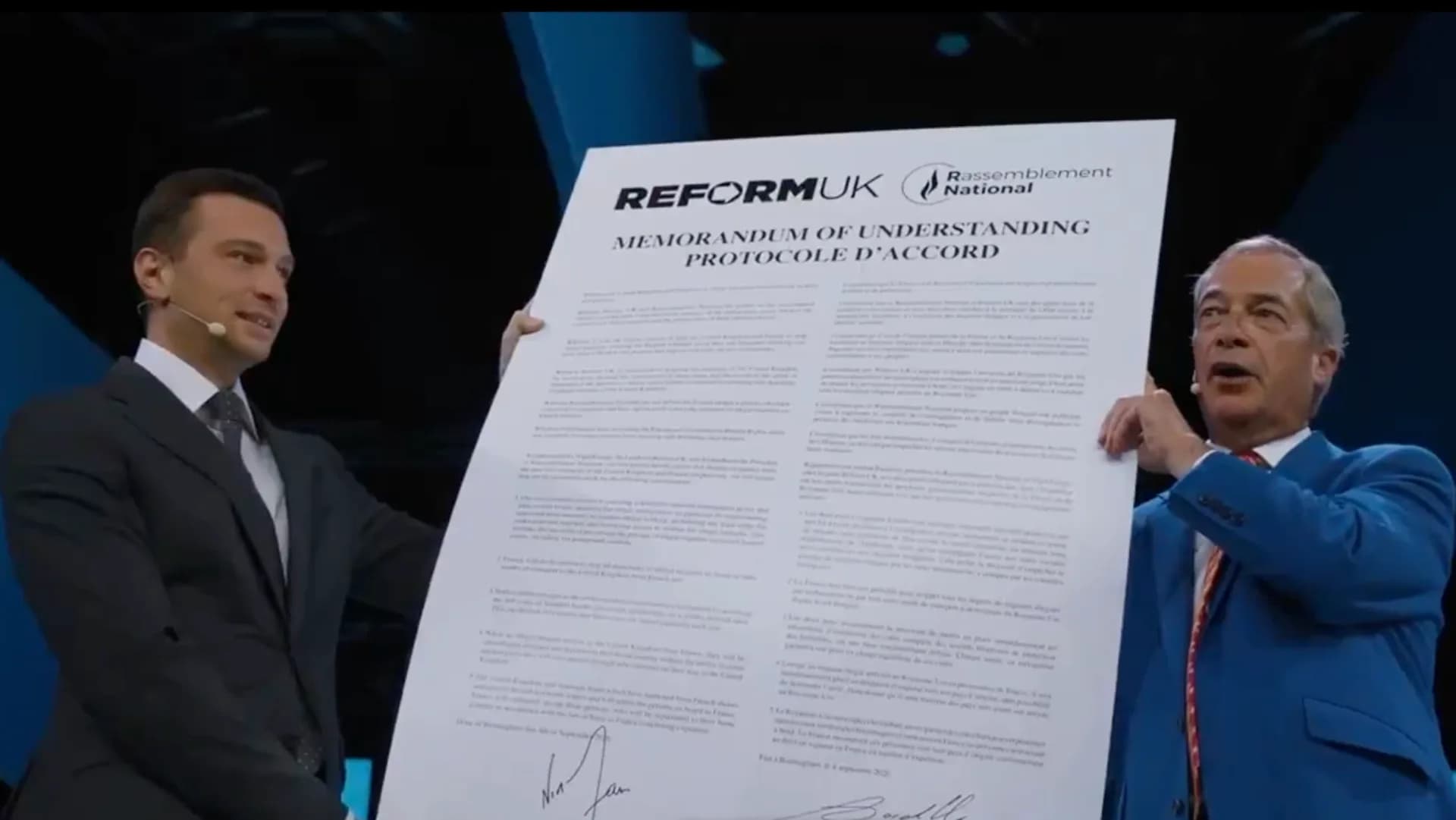
The agreement was signed on the main stage of Reform UK's 2026 national conference by the two politicians. The document would bind a future National Rally-led French government to take back illegal immigrants who set off from French shores to enter British territorial waters and are subsequently returned to France.
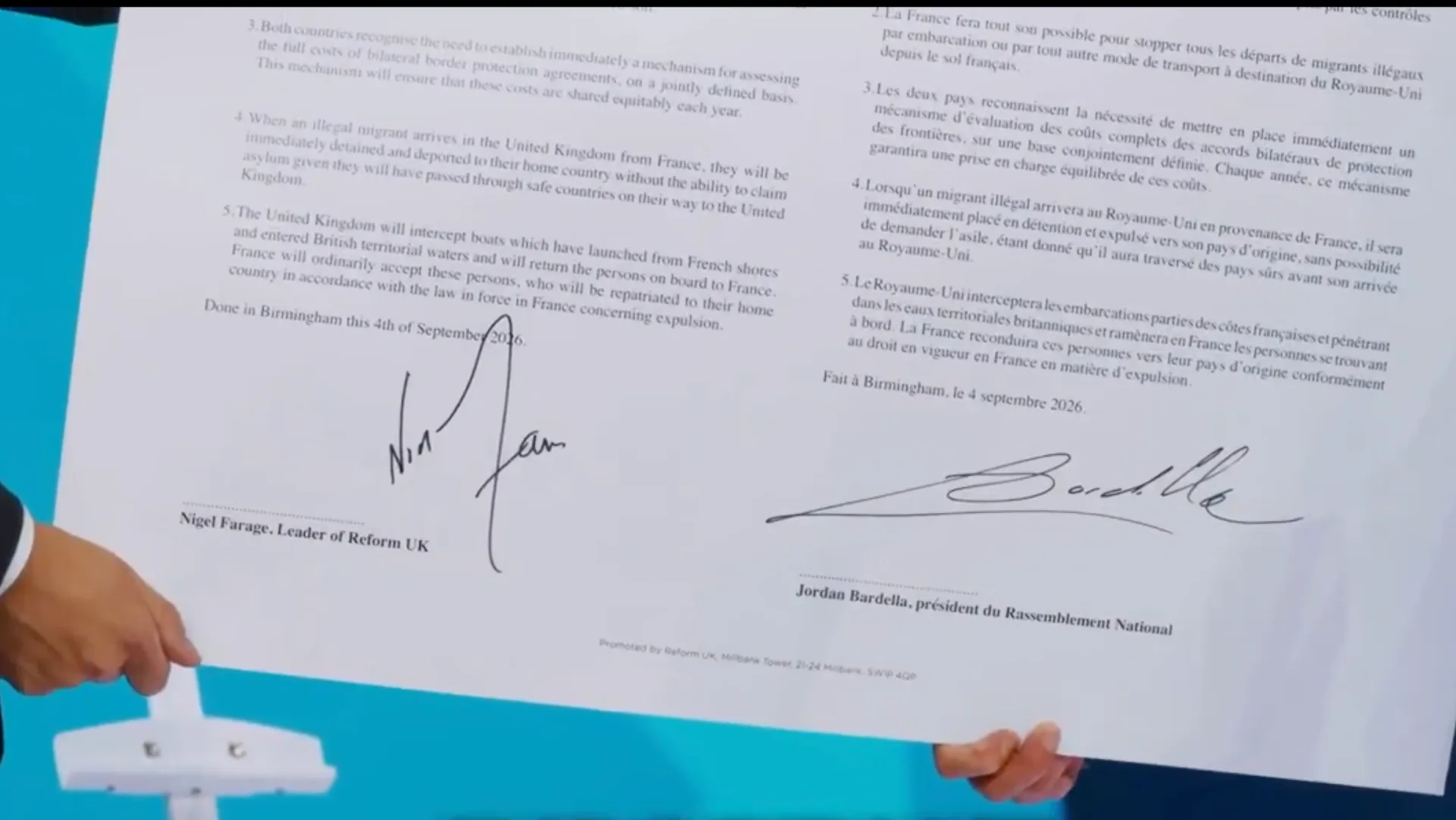
Farage described the agreement as "a true, new entente cordiale between the two countries" – a reference to the historic 1904 agreement between Great Britain and France.
The Entente Cordiale also refers to the series of diplomatic agreements signed between the United Kingdom and France on April 8, 1904, which resolved colonial disputes between the two countries.
The term was first used during the reign of King Louis Philippe and later during the French Third Republic to characterize a diplomatic rapprochement in which France and the United Kingdom sought to settle their outstanding differences, primarily regarding the partition of Africa.
The expression *entente cordiale* gave rise to terms such as *entente* and *Little Entente*, and inspired new coinages in a similar pattern, such as *entente amicale* (friendly understanding) (Sarkozy, 2008) and "entente formidable" (formidable understanding).
French politicians criticize the deal
Bardella stated:
"The United Kingdom must not be the destination for illegal immigrants arriving via France."
The French politician also criticized President Emmanuel Macron, claiming that Macron is responsible for the failure of French border security, and that better border controls could prevent migrants from setting off from the Calais area in the first place. The agreement sparked fierce criticism in France.
Édouard Philippe, presidential candidate for the center-right Horizons party, called the move an "about-face" by the National Rally and questioned whether Marine Le Pen truly "stands on the same platform" as Bardella. Gabriel Attal, a politician from the centrist-right Renaissance party, accused the National Rally of "bowing to foreign interests" and showing a "high degree of subservience" to other powers. Far-left politician Jean-Luc Mélenchon claimed the agreement threatens French national dignity, declaring that preventing Le Pen's election in 2027 has now become "a matter of national dignity." Meanwhile, Raphaël Glucksmann, leader of the center-left Place Publique, dismissed the pact as evidence of the National Rally's "weakness," arguing it proves the party is incapable of effectively defending France's interests.
The signing of the agreement came shortly after Macron visited London, where he held talks with British Prime Minister Andy Burnham on strengthening cooperation against migration across the English Channel.
Farage's outreach
Between 1999 and 2014, Farage consistently rejected an alliance with the National Rally's predecessor, the National Front, due to concerns over antisemitism. Regarding the current rapprochement, Farage praised Marine Le Pen for taking "significant steps" to remove extremist elements from the party.
The conference was not entirely smooth sailing for Reform UK either: the party was reported to the police just hours before the event over allegations of illegal foreign campaign donations.